
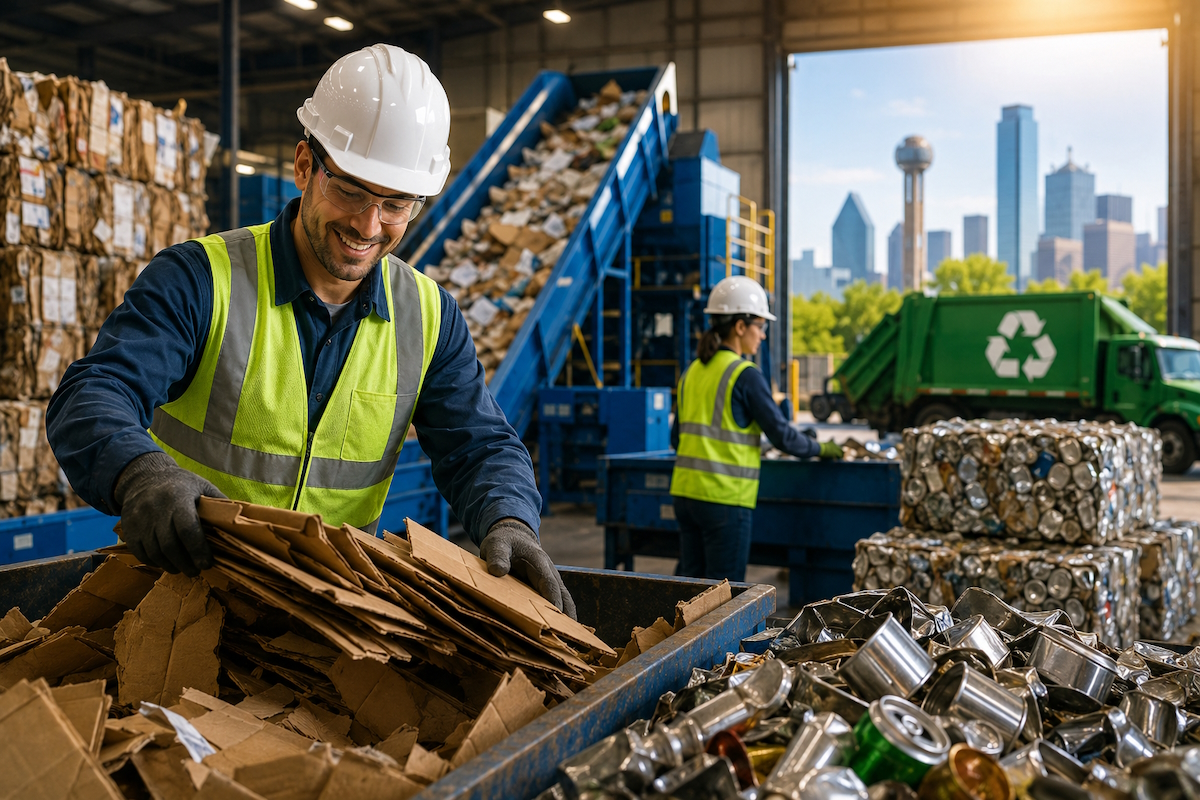
Every day, businesses across the country generate thousands of tons of recyclable materials through manufacturing, shipping, construction, warehousing and daily operations. Without a proper recycling strategy, valuable materials such as cardboard, paper and industrial metals can become unnecessary disposal costs instead of resources that can be recovered and reused. While many people think of recycling as something that happens at home, the recycling industry plays a much larger role behind the scenes. Commercial recycling companies help manufacturers, distribution centers, construction companies and other organizations recover valuable materials, reduce landfill waste and support a more sustainable economy.
According to the U.S. Environmental Protection Agency’s Sustainable Materials Management (SMM) approach, managing materials throughout their entire lifecycle—from extraction and production to use, recovery and reuse—is essential to reducing environmental impacts and creating a more sustainable future.
For businesses looking to improve waste diversion, reduce disposal costs and recover value from recyclable materials, partnering with an experienced provider of commercial recycling services can create measurable operational and environmental benefits.
What Is Industrial Waste?
Industrial waste includes unwanted materials generated during manufacturing, production, distribution, construction and other commercial activities. Common examples include:
- Corrugated cardboard
- Office paper
- Newspaper and printed materials
- Scrap steel
- Aluminum
- Stainless steel
- Copper
- Brass
- Packaging materials
- Manufacturing scrap
Many of these materials still have significant economic value when properly collected, sorted and processed. Instead of becoming a disposal expense, recyclable materials can become valuable commodities that are reused in new products. The EPA identifies recycling and materials recovery as important strategies for reducing waste and conserving resources. Businesses can learn more about recycling fundamentals through the EPA’s Recycling Basics resources.
Companies looking to improve paper, cardboard and metal recycling processes can learn more through Texas Recycling’s commercial recycling services. Call 214-357-0262
How the Recycling Industry Turns Waste Into Valuable Resources
Modern recycling operations use advanced collection systems, sorting technology and processing methods to recover materials that would otherwise be sent to landfills.
For businesses, recycling is not simply about removing waste. It is about identifying materials that still have value and creating a system to capture that value.
Recovering Paper, Cardboard and Fiber Materials
Paper and corrugated cardboard are among the most common recyclable materials generated by businesses. Manufacturing plants, distribution centers, retailers and office facilities often generate large volumes of cardboard packaging and paper materials. Through a properly designed cardboard recycling program, businesses can keep valuable materials out of landfills while creating opportunities for material recovery.

Once collected, cardboard and paper are sorted, processed and sent to paper mills where they can become new packaging products, boxes and other paper goods. Organizations such as the American Forest & Paper Association (AF&PA) highlight the importance of paper recovery and recycling in supporting a sustainable paper manufacturing cycle. Businesses can also recover value from office paper and other fiber materials through professional paper recycling programs designed for commercial facilities.
Recycling Industrial Metals
Metal recycling is another major part of the recycling industry. Manufacturing plants, construction companies and industrial facilities generate many recyclable metals, including:
- Steel
- Stainless steel
- Aluminum
- Copper
- Brass

Unlike many materials, metals can often be recycled repeatedly while maintaining their usefulness. Recovered metals become valuable raw materials used in manufacturing new products. The U.S. Geological Survey tracks the importance of minerals and metals in the U.S. economy through its Mineral Commodity Summaries, which provides information about mineral production, supply and demand trends.
Through professional metal recycling services, businesses can recover value from industrial metal waste while reducing the need for additional raw material extraction.
Advanced Recovery and Material Reclamation
Some industrial waste streams contain materials that can be recovered and reused through specialized processing.
Reclamation allows valuable components to be separated from discarded materials and returned into productive use. These recovery efforts reduce landfill dependency while extending the useful life of existing resources.
The recycling industry continues investing in improved sorting technology and processing methods to recover more materials efficiently. Texas Recycling helps businesses identify recyclable materials through customized programs designed around their operations. Companies can review examples of accepted materials through our recycling materials guide.
Texas Recycling: Metal, Paper, Cardboard Recycling and a Whole Lot More! 214-357-0262
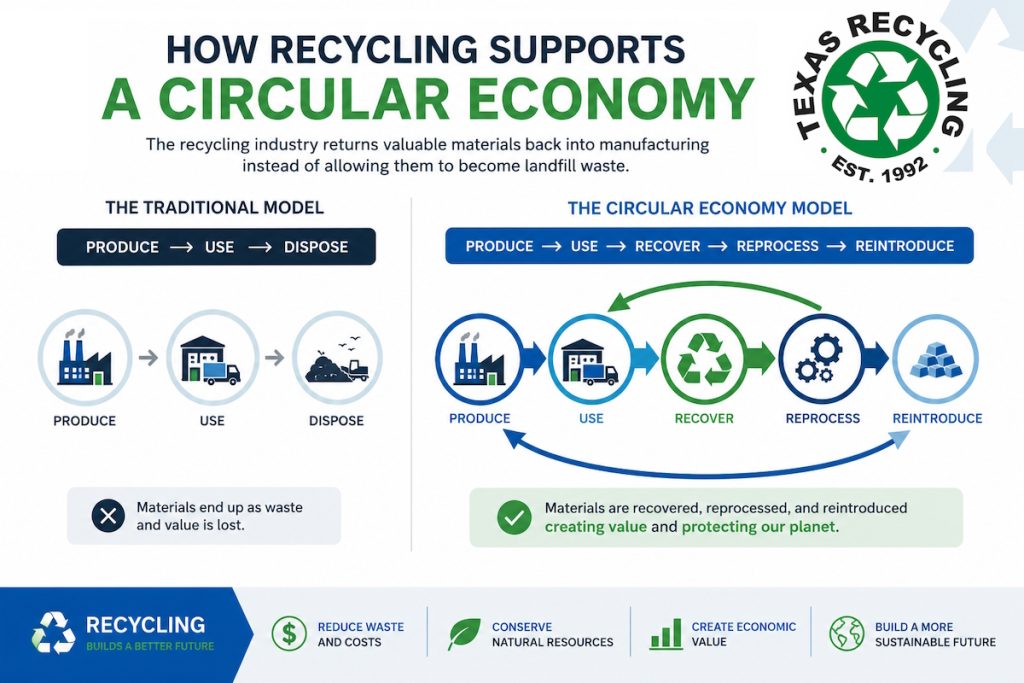
How the recycling industry Supports a Circular Economy
For decades, many businesses followed a simple model:
Produce → Use → Dispose
Today, forward-thinking organizations are moving toward a circular economy:
Produce → Use → Recover → Reprocess → Reintroduce
The recycling industry makes this possible by returning valuable materials back into manufacturing instead of allowing them to become landfill waste.
In North Texas, where manufacturing, logistics, construction and distribution operations continue to grow, businesses are increasingly looking for ways to reduce waste while improving efficiency. A well-designed industrial recycling program helps companies capture value from materials already moving through their facilities.
This approach helps businesses:
- Reduce dependence on virgin raw materials
- Improve supply chain resilience
- Increase landfill diversion
- Support sustainability goals
- Create economic value from materials previously considered waste
The EPA’s Sustainable Materials Management program emphasizes this lifecycle approach by encouraging organizations to consider the environmental impact of materials throughout their entire lifespan.
Business Benefits of Industrial Recycling
Industrial recycling provides benefits that extend beyond environmental responsibility.
Lower Operating Costs
Landfill disposal and waste hauling expenses continue to increase in many markets. Separating recyclable materials from general waste can reduce disposal volumes and help businesses lower waste management costs.
Depending on material type, quality and volume, companies may also generate revenue from recyclable commodities such as cardboard, paper and industrial metals.
Improve Sustainability Performance
Many organizations now track sustainability performance through ESG reporting, customer requirements and corporate environmental goals. Recycling helps companies:
- Increase landfill diversion rates
- Track recovered materials
- Demonstrate responsible resource management
- Support sustainability initiatives
Protect Natural Resources
Recycling reduces the need to extract and process additional raw materials. Recovered metals, paper fibers and other materials provide manufacturers with valuable resources while helping conserve energy, reduce environmental impacts and support a stronger domestic supply chain.
Improve Facility Efficiency
A structured recycling program creates cleaner, more organized workplaces. Clearly defined recycling procedures help employees properly separate materials, improve facility operations and reduce unnecessary waste throughout the organization.
Choosing the Right Commercial Recycling Partner
Every business generates different recyclable materials, which means recycling programs should be customized. An experienced recycling partner can evaluate:
- Materials generated at your facility
- Recycling volumes
- Collection schedules
- Equipment needs
- Transportation requirements
- Opportunities for cost savings and revenue recovery
Understanding the value of recycling is the first step. The next step is creating a program that works within your facility’s daily operations.
Texas Recycling develops customized industrial recycling programs for manufacturing facilities, warehouses, distribution centers and other commercial operations throughout Dallas and North Texas.

Commercial Recycling Programs for Dallas Businesses
Is your company ready to start an industrial recycling program? For more than 30 years, Texas Recycling has helped businesses throughout Dallas and North Texas develop customized recycling programs designed around their unique operations.
We specialize in recovering valuable recyclable materials including:
- Corrugated cardboard
- Office paper
- Newspaper
- Industrial paper
- Scrap steel
- Stainless steel
- Aluminum
- Tin
- Other recyclable materials
Our team works with businesses to create practical recycling solutions that help reduce landfill waste, improve sustainability performance and recover value from recyclable commodities. We specialize in paper, newspaper, corrugated cardboard, office paper, industrial scrap metal, aluminum, tin and more. Your company can recycle industrial waste responsibly while helping your bottom line.
Texas Recycling creates customized recycling programs for industrial organizations. Learn more about our Commercial Recycling Services, Industrial Recycling Solutions, and the recyclable materials we accept. Call 214-357-0262 today to learn more. Or get started on a commercial recycling or industrial recycling program for your Dallas-area business.